Analysis of recent surveys and reports provides insights into the perspectives of South African business executives regarding the integration of AI into their operations. The Q2 2024 Innovation Catalyst Research conducted by Dell Technologies revealed that a significant portion of South African businesses are actively planning for AI adoption, with 49% of respondents indicating they are creating dedicated budgets for AI projects and 21% having already commenced the deployment of AI solutions. This suggests a growing recognition of AI’s importance and a willingness to invest in its implementation.

However, it has also been noted that many South African executives still perceive AI as a futuristic concept rather than an immediate strategic imperative. This perception could indicate a potential lag in fully understanding AI’s current capabilities and the urgency of its adoption for maintaining competitiveness. In contrast, Premier Alan Winde of the Western Cape Province has publicly stated that AI is an inevitable and ongoing development, emphasizing the need for the region to proactively leverage its potential to enhance public services and stimulate economic growth. He acknowledges the potential for job displacement but stresses the importance of adapting to AI and focusing on reskilling the workforce.
Pieter Bensch, Managing Director and Executive Vice President for Sage Africa & Middle East, holds a strong belief in AI’s transformative power, asserting that it offers unparalleled opportunities for economic expansion, job creation, and improved service delivery in South Africa. He urges the government to prioritize the creation of an environment conducive to AI innovation.
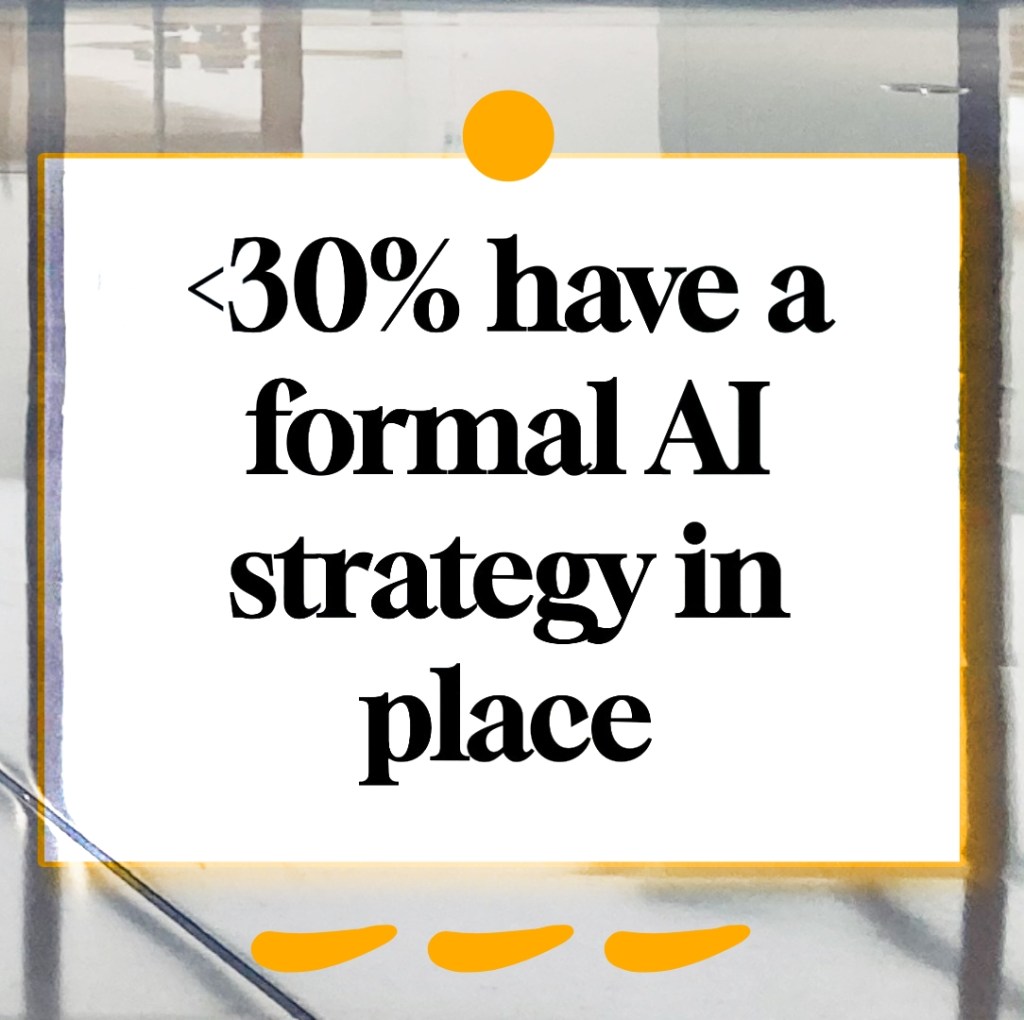
Despite this growing enthusiasm, a concerning statistic from a recent report indicates that less than 30% of businesses in South Africa have a formal AI strategy in place, even though global interest and adoption of AI are significantly higher. While there is an increasing awareness and investment in AI among South African business leaders, a notable gap exists in the development of comprehensive strategic plans for its integration. The fact that nearly half of businesses are allocating budgets for AI projects signals a commitment to exploring its potential.
However, the relatively low percentage of businesses with formal AI strategies suggests that many organizations might still be in the early stages of experimentation or lack a clear roadmap for effective implementation. The differing viewpoints among executives, with some viewing AI as a distant future technology and others recognizing its immediate strategic importance, highlight a disparity in understanding and preparedness for AI adoption across the South African business landscape. This divergence in perception could put those who are slow to embrace AI at a competitive disadvantage as AI increasingly becomes a crucial driver of business transformation and innovation.
General Consensus
There is a general consensus among executives and industry experts in South Africa regarding AI’s potential to significantly enhance efficiency, boost productivity, and contribute to overall business improvement across various sectors.
Pieter Bensch, for instance, believes that AI can streamline governmental operations, leading to more efficient service delivery and improved overall effectiveness. The capacity of AI to automate routine and time-consuming tasks, optimize complex supply chains for better resource allocation, and enhance the quality of decision-making through data-driven insights is widely acknowledged across different industries. Premier Winde anticipates that the strategic adoption of AI will not only streamline existing services but also attract further investment into the Western Cape region.
The prevailing sentiment among business leaders and industry observers is that AI holds the key to significant advancements in operational efficiency, productivity gains, and overall enhancements in business performance throughout South Africa. The focus is now increasingly on translating this recognized potential into practical and impactful implementations across various sectors.