Origionally published: August 29, 2025
Introducing the BLEC Ecosystem Report 2025
Over months of conversations, roundtables and surveys, our community has pooled real experiences: what’s working, what’s broken, and where we believe South Africa’s business ecosystem must go next.
This 4-part article series previews the report’s biggest insights and sets out one simple idea: progress accelerates when we share a unified vision and build it with data. Consider this your guided tour of what’s happening on the ground, what could be better, and the practical ways we can pull together to move the needle.
Written by: Anza Kutama, BLEC Research Lead
Edited by: Tinashe Machokoto, BLEC Development Lead

Throughout the year, BLEC has sought to understand the varying business models within South African industries, in order to uncover gaps and publish them for our audience.
Over the formulation of the report, we uncovered that different business functions are being re-imagined globally due to AI, but those very same developments further increase not just the digital divide, but the digital literacy of a significant population in South Africa.
This trend has serious implications for future employment, economic inclusion, and the country’s overall development.
Where it is much dire
The consequences are much dire in the underserved populations of the country. A recent 2025 study by Discover Global Society found that of those in the Eastern Cape rural communities, a 66.2% reported that they had insufficient digital skills. They also reported two main reasons for this; 52.3% lacked internet access, and 38.5% referred to affordability as a primary constraint. These results can be generalised across other provinces like Limpopo and Mpumalanga when looking at the employment levels of each. A claim that is supported by Noyam’s Journal of Education and Learning Technology’s recent 2025 publication.
Business development
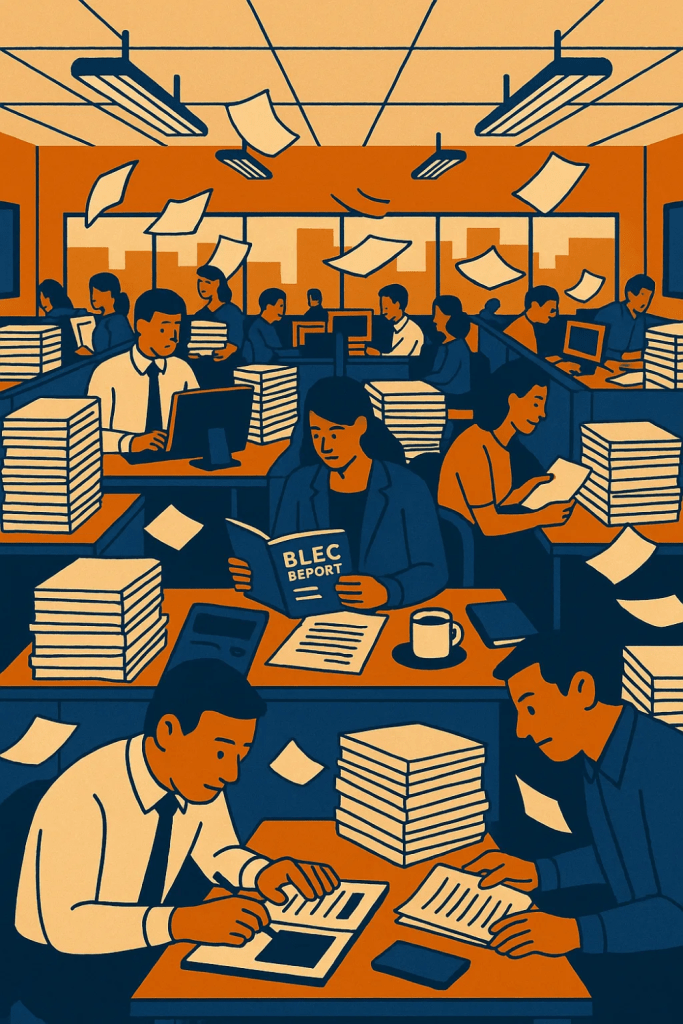
Entrepreneurs still emerge from these regions, and many have gone on to build successful businesses. However, FinMark Trust surveyed Micro, Small, and Medium Enterprises (MSMEs) for their MSME South Africa report, and they extrapolate that while there’s been an increase in digital services, the MSME ecosystem remains largely paper-driven, which we’ll explain why this is a problem as you read further.
This suggests that simply having access to technology is not enough. There is a need for targeted interventions to address the digital literacy gap and help businesses formalise and digitise their operations. However, our BLEC report also emphasises that digitising informal businesses without addressing their core issues, such as skills shortages, will not yield the desired results. But this brings other challenges.
Skills development
To effectively teach digital literacy, the educator also has to be digitally literate, more so in experience than training. However, a late 2024 analysis of digital teaching by SA Journal of Human Resource Management for educators also found that, while some training is offered to modern workforces within businesses, educators often lack the necessary skills to effectively implement digital learning interventions due to the limited training they received themselves.
And as The International Labour Organization (ILO) noted in their World Employment and Social Outlook: May 2025 report, companies are already struggling to find qualified professionals with the digital expertise needed to drive growth and innovation. If the educators who are meant to be preparing the next generation of employees are not themselves digitally competent, this skills gap will only widen, hindering national development and global competitiveness.

The rise of AI

AI is changing the world, and that is an understatement. The world of work is much more exposed to this change given organisations’ constant drive for efficiency at all levels. This is resulting in the creation of millions of AI agents every day, a portion of which are currently being used in production to handle customer service, bookings and sales, human resources, and a variety of other operations across your favourite brands and companies.
MSMEs like we mentioned earlier that are still paper-driven cannot unlock these benefits of AI. And the longer they remain paper-driven the more expensive it is to digitise historical business data once that decision has been taken. It is therefore imperative that not only these businesses, but also government and educational institutions, prioritise the immediate digitisation of their operations.
For businesses, this transition is a direct path to increased productivity, streamlined workflows, and enhanced security, while also unlocking the power of data-driven decision making.
For government, digitisation promises greater transparency, cost-effectiveness, and more efficient public service delivery, fostering a better relationship with citizens.
In education, it’s about preparing students for a future where digital literacy is a fundamental requirement, not just a bonus skill. This nationwide digital transformation is a prerequisite for leveraging emerging technologies like AI, and its success hinges on a crucial next step.
The importance of collaboration
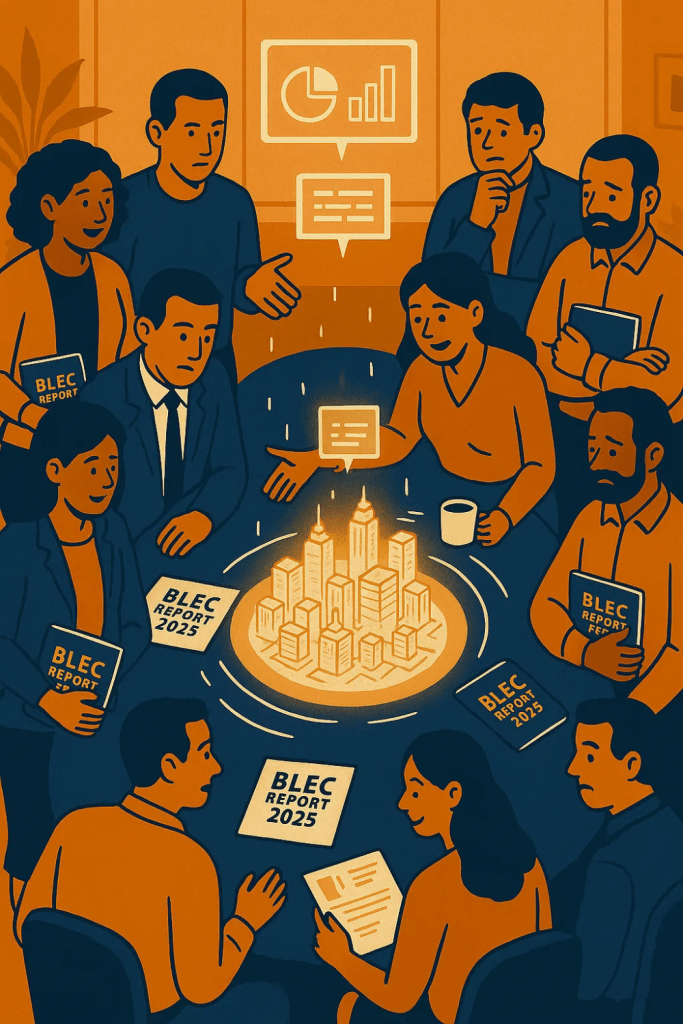
Our report emphasizes a Unified Vision between industry players as a key starting point towards closing these identified gaps in upskilling. Government, businesses, non-profits, and educational institutions should implement a framework of active collaboration that creates highly informed and highly targeted training programs that align with workforce needs.
Other countries like Singapore and Estonia have been successful in closing the digital skills gaps and perhaps South Africa can learn from them. You can read more about these lessons in our 6th section of the report, ‘Innovation & Technology’. The key takeaway is that these collaborative strategies are effective because they bring together key ecosystem players, share information, and facilitate adaptable training programs that keep a pipeline of skills in motion and ready to take on new developments as they happen.
Companies like OpenAI are pioneering the advancements in AI, the likes of Meta are adding more capacity to their undersea internet cable networks, and the likes of Amazon are building more data centers everywhere that’s feasible. Without the investment in human capital, even the most advanced digital infrastructures will fail to close the digital divide and unlock South Africa’s full economic potential.
Summary
The BLEC Ecosystem Report 2025 outlines key challenges and opportunities in South Africa’s business environment, particularly regarding digital literacy among underserved populations.
With a significant portion of MSMEs still reliant on paper-driven processes, the report underscores the urgent need for (1) digital skills development and organisational digitisation. It emphasises (2) the importance of collaboration among stakeholders to close the skills gap and adapt to advancements in technology.
Ultimately, the report advocates for a collective effort to enhance productivity and educational outcomes across sectors.
Download the full report here.
We encourage readers to get involved or contribute to the solutions presented here by reaching out here.