Last updated: October 15, 2025
Introducing the BLEC Ecosystem Report 2025
Over months of conversations, roundtables and surveys, our community has pooled real experiences: what’s working, what’s broken, and where we believe South Africa’s business ecosystem must go next.
This 4-part article series previews the report’s biggest insights and sets out one simple idea: progress accelerates when we share a unified vision and build it with data. Consider this your guided tour of what’s happening on the ground, what could be better, and the practical ways we can pull together to move the needle.
Written by: Anza Kutama, BLEC Research Lead
Edited by: Tinashe Machokoto, BLEC Business Development Lead

A closer look at South Africa’s business landscape reveals a dynamic and resilient ecosystem driven by international migrants. The following article, based on secondary sources from StatsSA unpacks the nuances around migrant and immigrant participation within the country’s economy, dispelling a misconception, and analysing one particular business model of migrant entrepreneurs.
According to StatsSA’s latest 2022 census, South Africa is home to an estimated 2.4 million international migrants. This figure represents approximately 4% of the country’s total population of 62 million. With Zimbabwe, Mozambique, Malawi, and Lesotho accounting for the largest share of migrants. It is worth noting that these countries’ currencies, except Lesotho, are weaker than South Africa’s Rand. We’ve come to understand the ecosystem as one where migrant and local entrepreneurs are interdependent actors in one space. By situating these numbers within the broader business fabric, we can see that inclusion, not separation, is what drives resilience.
Dispelling the myth of purchasing power
The weaker currencies of these neighboring countries might seem to indicate a lack of purchasing power upon entry, but this would be a superficial reading. The 2022 StatsSA report shows that among immigrants, 45.8% of the men employed were concentrated in:
- wholesale and retail trade (24.2%)
- and construction (14.8%),
While 18.2% of women were employed, most notably in private households (9.4%).
This migrant population has a significant presence in both the formal and informal sectors, and represents a distinct consumer market with specific needs and spending patterns that savvy brands can leverage. Businesses that can understand and cater to these needs can find a profitable niche.
Remittances as a signal of economic activity
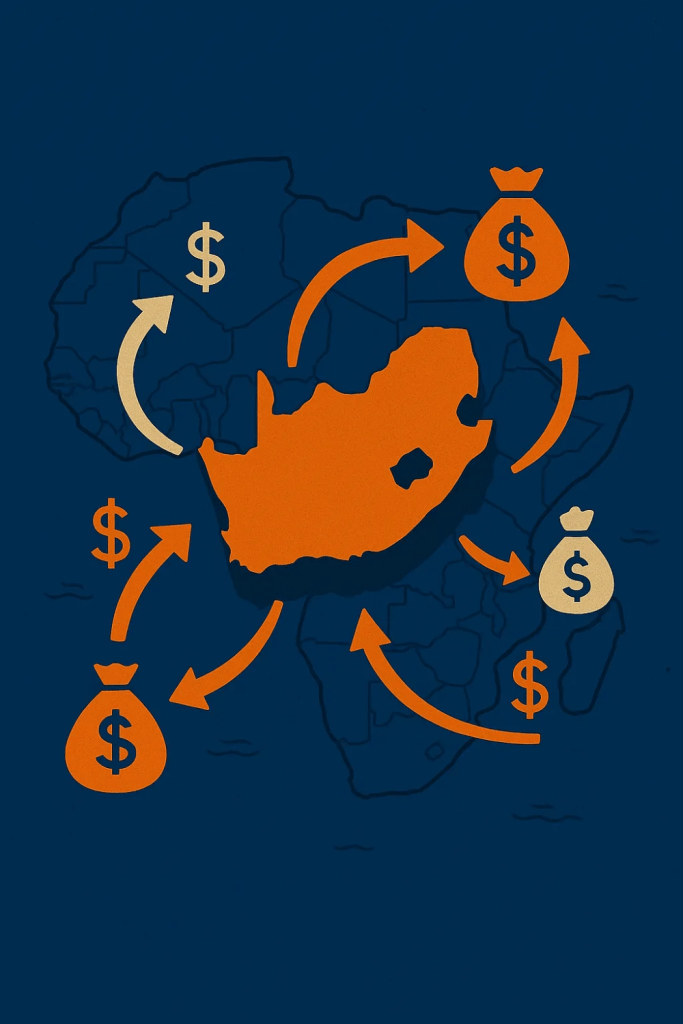
Some might ponder about migrants sending remittances back to their home countries, effectively having money leave the country. While that is the case, it is a strong signal of their economic activity within the country, not a sign of their inability to participate in the consumer market. From BLEC’s vantage point, remittances are not leakage but proof of velocity. Money earned locally is moving through multiple economies, underscoring South Africa’s role as a regional engine of economic activity.
The rise of migrant entrepreneurship
The migrant population has also injected significant entrepreneurship across South Africa, serving not only the migrant communities themselves but every part of South Africa. One example of this is the spaza shops owned notably by migrants from Ethiopia and Pakistan, who have deeply penetrated consumer markets among the middle and working class communities. BLEC sees these models as reminders that entrepreneurship is borderless. Migrant-owned spaza shops expand consumer choice and access, but also model efficiencies that local entrepreneurs can adapt into their own growth strategies.
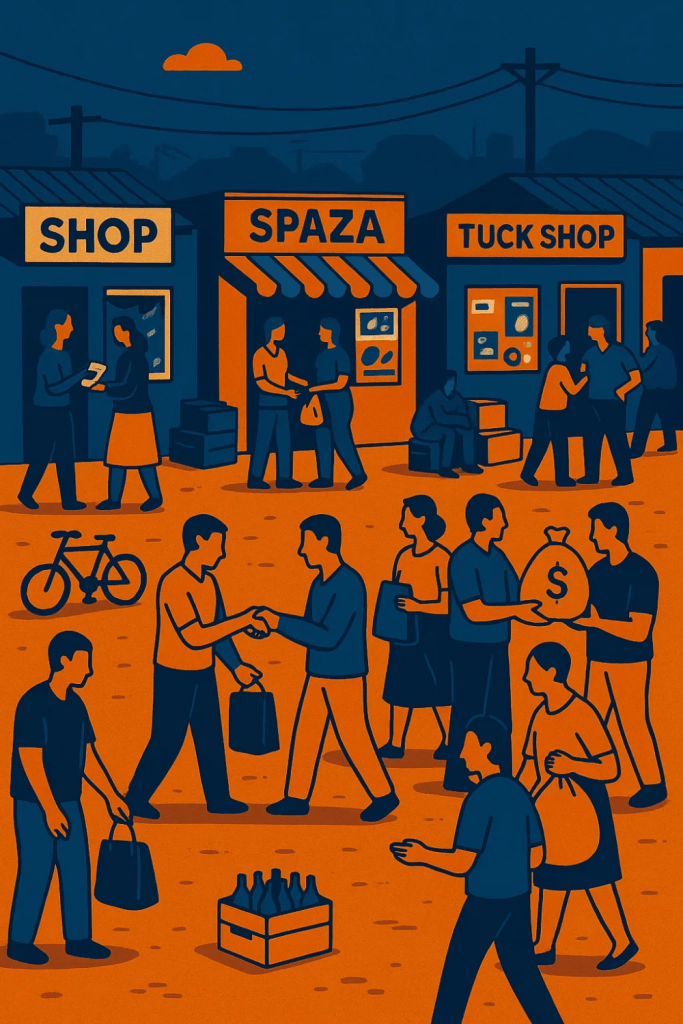
There’s surely a lot to learn among leaders with regards to the resilient and innovative business models migrant entrepreneurs use to be successful. One of those business models is collective financing.
Collective financing: A powerful business model

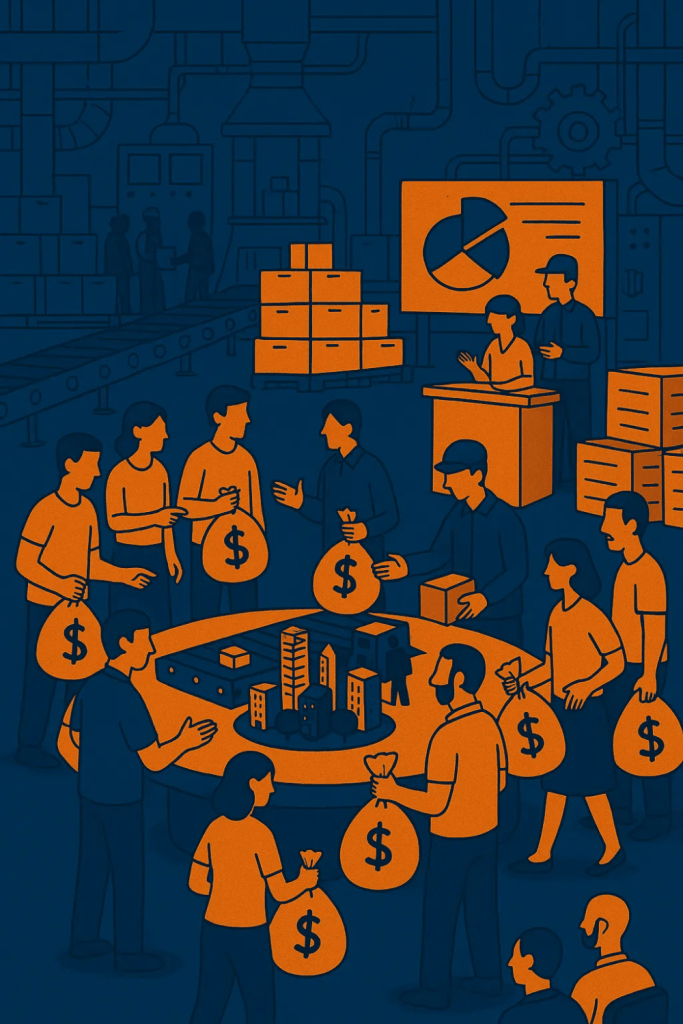
Collective financing allows them to overcome the significant hurdle of securing capital. This system functions as a powerful, self-sustaining financial network, which is a stark contrast to the individual “survivalist” approach often seen in local businesses.
Instead of an individual trying to save for a single shop and take on a massive business risk by themselves, groups of Pakistan and Ethiopian spaza shop owners and prospective owners pool their resources. These collective funds, often managed through informal “stokvel”-like systems, serve as a source of start-up capital or expansion finance that would be completely inaccessible from formal financial institutions due to a lack of collateral and credit history.
The power of collective action

By operating as a collective, they unlock economies of scale that are simply impossible for individual entrepreneurs. This collective strength extends beyond just financing. It enables them to conduct bulk purchasing of stock from wholesalers, securing significant discounts and better terms that a single shop owner could never achieve. This reduces input costs, allowing them to offer more competitive prices to consumers. We’re finding that collective enterprise is one of the missing pieces in much of South Africa’s fragmented ecosystem. These stokvel-like structures mirror exactly what our participants have been calling for: more collaboration, shared infrastructure, and collective bargaining power.
Upon further analysis, we find that this network can facilitate strategic investment in specific geographical areas, establishing “strongholds” of multiple, interconnected spaza shops. This not only maximizes their market presence but also creates a robust and reliable supply chain with uninterrupted stock and a secure geographical distribution. These are a critical advantage within a highly competitive and often volatile market. In essence, they transform their multiple small businesses into a formidable, collective enterprise, turning their limited individual resources into a powerful engine for collective growth and market dominance – a masterclass in turning scarcity into strength.
Download the full report here.
We encourage readers to get involved or contribute to the solutions presented here by reaching out here.